
| |
The City |
|
 |
 History Culture Tourism Economy Photo Album The map
 |
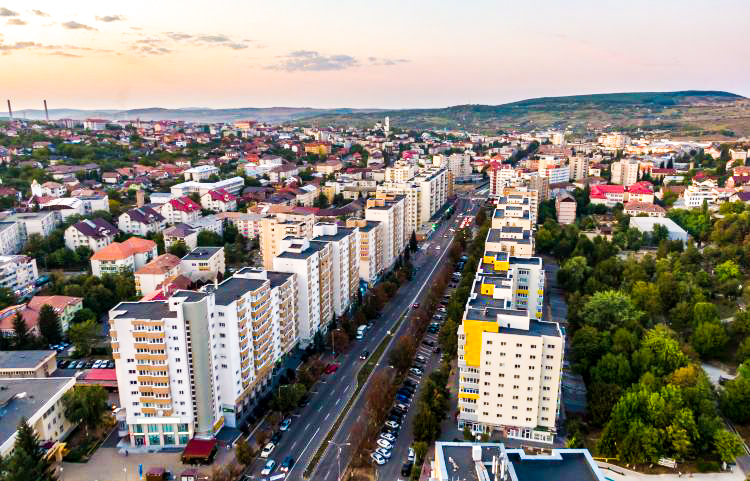
| Placed in north-western Romania, at the crossing between Eastern Carpathians and the Apuseni Mountains, Salaj county was known as Sylvania County ( i.e. the County of Woods). With an area of 3 850 sq. km., its neighbors are Satu-Mare and Maramures counties in the north, Bihor county in the west and south-west and Cluj county in south-east. Placed in the centre of the county it is the administrative residence of the Salaj county. It is situated close to the border with the former Roman Empire, more precisely 8 km from the Roman camp of Porolissum - the strongest fortress in north-western Roman Dacia. During the medieval times the town represented the passage between Central Europe and Transilvania, through the well-known "salt road". Today the town is connected to the European road on the axis Cluj- Satu-Mare- Petea Vama, DN1F-E81. Apart from its economic importance, it is a powerful cultural educational and touristic centre. It is not long since, apart from the well-known schools and high schools, two more colleges have been authorized to carry on their activities in the town. |
 |
© Primăria Municipiului Zalău | |